
Few contemporary artists have had as significant an impact on British culture and the wider art world as Grayson Perry. Renowned for his vibrant ceramics, tapestries, prints, and documentaries, Perry has built a career on challenging assumptions about class, identity, gender, taste, and belonging. His work combines technical mastery with sharp social commentary, creating art that is both visually engaging and intellectually provocative.![]()
Born in Chelmsford, Essex, in 1960, Perry rose to prominence through his distinctive ceramic vessels, often decorated with intricate imagery and text that explore contemporary social issues. In 2003, he won the prestigious Turner Prize, becoming one of the most recognisable figures in British contemporary art. Beyond the gallery space, Perry has reached wider audiences through television programmes, public lectures, and books, helping to make contemporary art more accessible to people who might otherwise feel excluded from it.
A defining aspect of Perry's work is his willingness to examine complex and sometimes uncomfortable subjects. Rather than presenting simple answers, he encourages viewers to question their own beliefs and assumptions. Themes such as masculinity, social status, consumerism, and personal identity appear repeatedly throughout his practice, making his work highly relevant to contemporary society.
One notable example is The Gay Black Cats MC. This work reflects Perry's long-standing interest in masculinity and group identity. By referencing motorcycle club culture while subverting traditional stereotypes associated with male-dominated communities, the piece invites viewers to consider how ideas of strength, belonging, and sexuality are constructed and performed. Like much of Perry's work, it uses humour and unexpected imagery to open up deeper conversations about identity and social expectations.

(Grayson Perry - "Gay Black Cats M.C"
appliqué handmade flag, 2017)
Another significant work is Sponsored by You, which examines the relationship between art, commerce, and public participation. The title itself draws attention to the systems of sponsorship, consumption, and patronage that underpin modern culture. Perry encourages audiences to think critically about who supports the arts, how cultural value is created, and the ways in which commercial influences shape our experiences and perceptions. The work serves as both a commentary on contemporary consumer culture and a reflection on the role of the viewer in sustaining artistic production.
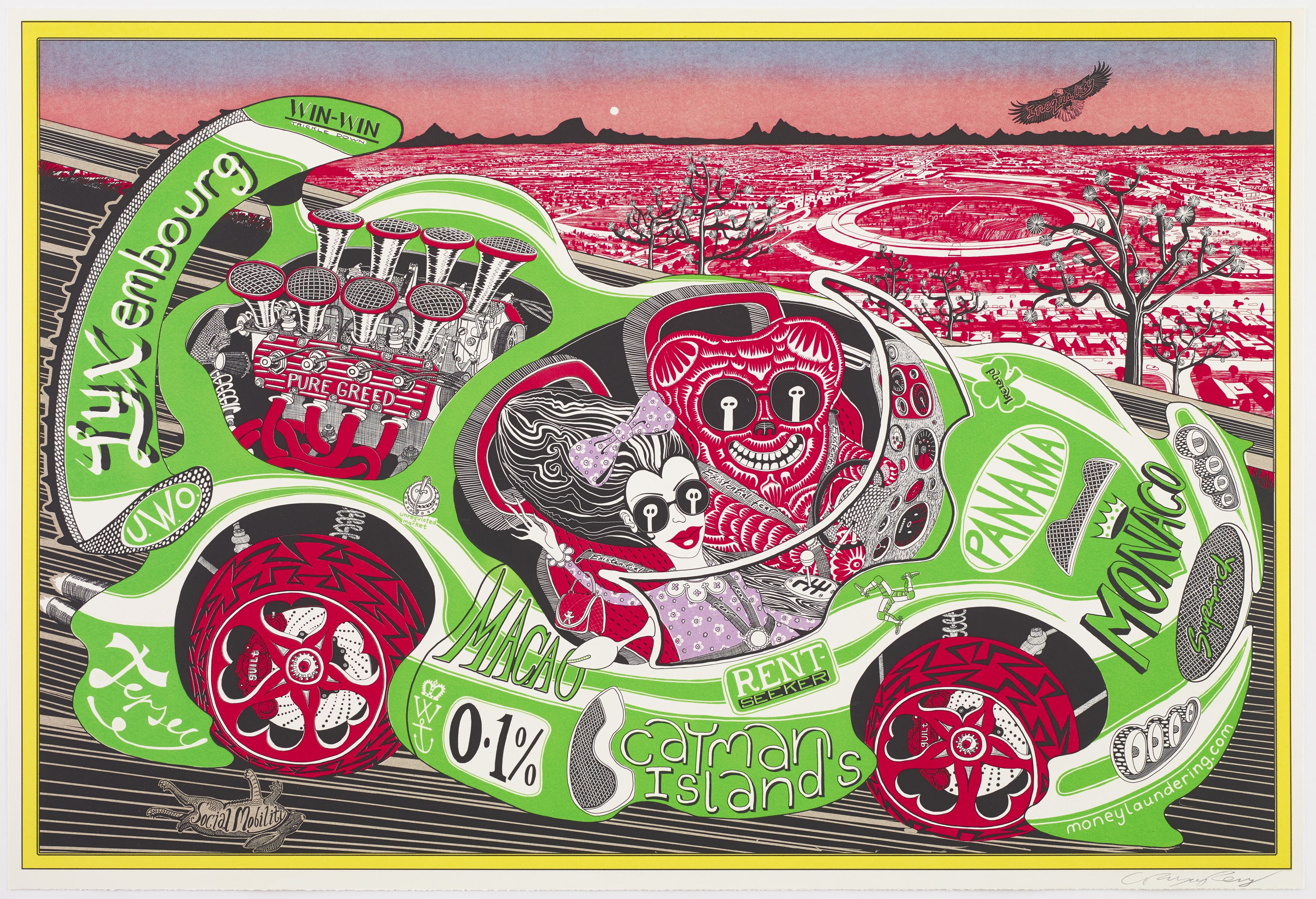
(Grayson Perry - "Sponsored by you" Etching 2019)
What makes Perry's art particularly powerful is its accessibility. While many contemporary artists can seem distant or obscure, Perry often uses storytelling, humour, and familiar cultural references to engage audiences. His work speaks to a broad range of people, inviting them into conversations about issues that affect everyday life. Whether addressing class divisions in Britain, exploring gender identity, or critiquing consumer culture, Perry consistently demonstrates that art can be both aesthetically compelling and socially meaningful.
Grayson Perry's influence extends beyond the objects he creates. He has helped redefine what contemporary art can be, challenging hierarchies between fine art and craft while encouraging greater public engagement with artistic and cultural debates. Through works such as The Gay Black Cats MC and Sponsored by You, Perry continues to push audiences to think differently about themselves and the society around them.
In an era marked by rapid social change and cultural division, Perry's work remains as relevant as ever. By combining craftsmanship, wit, and social insight, he has established himself as one of the most important and influential artists of his generation, leaving a lasting mark on both the art world and contemporary culture.